
For companies operating in or seeking to enter the defense industrial base, cybersecurity readiness is increasingly more than a regulatory obligation. It is a business consideration that can determine whether an organization is positioned to pursue new opportunities.
The Department of Defense's Cybersecurity Maturity Model Certification (CMMC) program reinforces the importance of protecting sensitive information throughout the defense supply chain. While the Department has suspended Phase II of CMMC implementation pending a comprehensive review of the program, Phase I requirements and existing contractual cybersecurity obligations remain in effect where applicable.
For defense contractors, the message is clear: a pause in certification requirements should not become a pause in preparation.
Cybersecurity readiness can become a competitive differentiator rather than a compliance exercise.
Readiness Before Opportunity
Government contracting opportunities can emerge quickly, and cybersecurity requirements may influence which companies are eligible to compete. An organization that first begins preparing for CMMC Level 2 when a solicitation requires a specific CMMC status may find itself facing a lengthy process involving security control implementation, policy development, documentation, remediation, and the applicable assessment and certification requirements.
By contrast, companies that have already established an appropriate security environment and obtained the required assessment status can respond to opportunities with greater confidence. The strategic question is therefore not simply whether an organization needs CMMC certification today. It is whether the organization will be ready when an opportunity requires it.
Right-Sizing the Compliance Environment
One of the most important considerations in preparing for CMMC is understanding the extent to which an organization receives, stores, processes, or transmits Controlled Unclassified Information (CUI). Some contractors routinely handle CUI across numerous business functions. Others may have limited requirements involving only a few individuals or projects. Still others may not handle CUI today but anticipate opportunities that could require it.
These differences matter. Attempting to bring an entire corporate IT environment within the scope of a Level 2 assessment can create substantial cost, complexity, and ongoing administrative responsibilities. A more focused approach begins by identifying where CUI needs to reside, who requires access, and which systems must support those activities.
The Strategic Value of a Dedicated CUI Environment
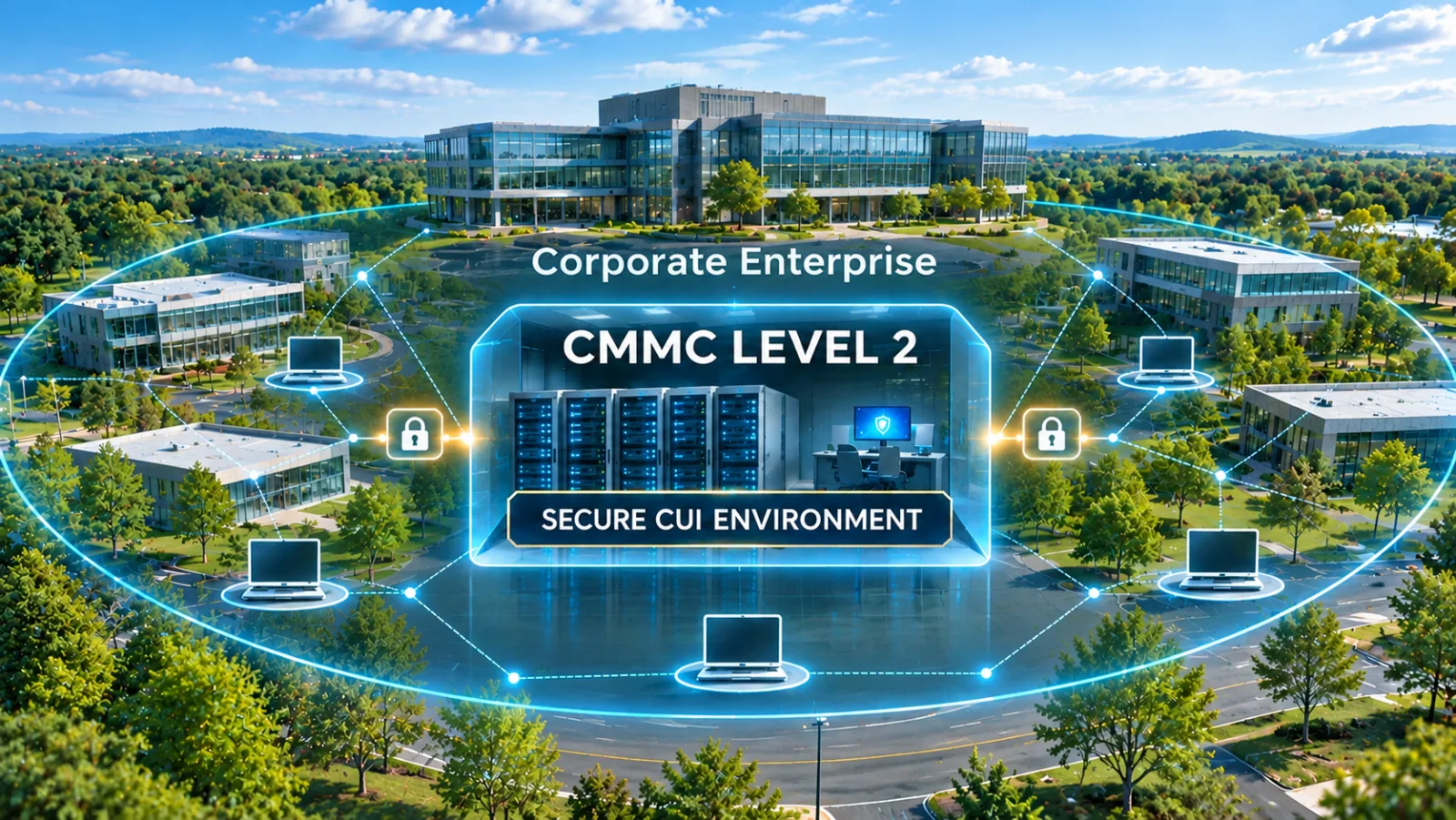
For organizations with limited or clearly defined CUI requirements, a dedicated secure enclave can provide an effective alternative to extending CMMC controls across their broader corporate infrastructure. An enclave establishes a controlled environment specifically designed to support sensitive information and associated security requirements.
When properly implemented, this approach can offer several advantages:
- Focused assessment scope: Limiting the systems, users, and processes involved in CUI activities can reduce compliance complexity.
- Reduced operational disruption: Everyday business systems can remain separate from the CUI environment, subject to applicable scoping rules.
- Shared security responsibilities: Qualified managed-service providers may deliver significant technical and operational controls, allowing organizations to concentrate on their remaining obligations.
- Scalability: The environment can be established before CUI is received and expanded as business requirements evolve.
An enclave is not an automatic certification solution. Organizations remain responsible for understanding their contractual requirements, implementing applicable controls, documenting shared responsibilities, and demonstrating compliance through the required assessment process. Nevertheless, a properly designed enclave can make CMMC readiness considerably more manageable.
Preparing for CMMC today positions organizations to compete for tomorrow's opportunities.
Preparing for What Comes Next
CMMC requirements will continue to evolve, but the underlying need to protect sensitive defense information is enduring.
Organizations should use the current implementation pause to evaluate their anticipated CUI requirements, understand their assessment scope, and determine whether their existing infrastructure or a dedicated enclave offers the most appropriate path forward. For companies that may encounter CUI requirements in future contracts, establishing a secure environment before those requirements arise can help avoid costly delays and missed opportunities.
At Jones Group International, we view cybersecurity readiness as an important component of organizational resilience, operational capability, and strategic preparedness. Through our experience and network of strategic partners, we help organizations evaluate their requirements, identify practical solutions, and develop an appropriate path toward CMMC readiness.
Related Resources
- Department of War, Suspension of CMMC Phase II Requirements
- DoD Chief Information Officer, CMMC Program Information
- NIST, NIST SP 800-171 Revision 2 – Protecting CUI in Nonfederal Systems and Organizations